Showing posts with label tercentenary. Show all posts

Tuesday, 17 April 2018

Raleigh 300: Who was involved in the tercentenary celebrations in 1918?

Continued from http://raleigh400.blogspot.co.uk/2018/02/raleigh-300-how-did-they-mark.html


Here are some of the people who felt that Sir Walter Raleigh was worth remembering and his life worth celebrating in 1918. 


It was the 300th anniversary of his execution, and Britain was still engaged in a world war. But that didn’t stop the nation’s Great and Good. They still believed, as they put it, in ‘one of the great heroes of the modern world’. 


HM King George V

The Raleigh Tercentenary Commemoration was seen as an initiative of national importance. No less a person than the King was its Patron.


A Tercentenary Committee to organise the event included: 


Arthur Balfour, KG, OM, PC, FRS, FBA, DL (1848-1930), 1st Earl of Balfour.  Politician. Foreign Secretary from 1916 to 1919, noted for  issuing the Balfour Declaration in November 1917.  He had served as Prime Minister from 1902 to 1905.

(Honorary President, speaker at the Mansion House, London, on Tuesday 29 October 1918)


George Forrest Browne (1833-1930). Bishop of Bristol 1897-1914.

(Vice-Chairman)


James Bryce, OM, GCVO, PC, FRS, FBA (1838-1922), 1st Viscount Bryce.  Academic, jurist, historian and politician. British ambassador to the United States from 1907 until 1913. Speaker at the Mansion House, London, on Tuesday 29 October 1918.
(Honorary Chairman) 


Sir Charles Harding Firth, FBA (1857-1936). British historian. Delivered a paper on Raleigh’s History of the World before the British Academy at Burlington House on 30 October 1918).  Image © Royal Historical Society
(Vice-Chairman)  


Sir Israel Gollancz,  FBA (1863-1930). Scholar of early English literature and of Shakespeare. Professor of English Language and Literature at King's College, London, from 1903 to 1930.  Gave an address on ‘Shakespeare and the New World, on Friday 1 November 1918).
(Honorary Secretary)   


Rufus Isaacs,  GCB, GCSI, GCIE, GCVO, PC, KC (1860-1935), 1st Marquess of Reading. Barrister, jurist and politician.  Ambassador to the United States from 1918 until 1919, while continuing at the same time as Lord Chief Justice.   
(Honorary President)


Walter Hines Page, (1855-1918)  
 Journalist, publisher and diplomat. US ambassador to the United Kingdom during WW1.  Illness that year had led to his retirement as ambassador.  Photo credit: Library of Congress
(Honorary President)

Photo credit: Illustrated War News   
Sir Charles Wakefield, GCVO, CBE (1859-1941), 1st Viscount Wakefield. British businessman and philanthropist who founded the Castrol lubricants company. He was Lord Mayor of London, 1915-16. His support created the enduring Raleigh Lecture on History at the British Academy.  
(Honorary Treasurer)


Apart from the Tercentenary Committee, others involved in the Raleigh 300 commemoration included:


Reverend Ernest William Barnes, FRS (1874-1953). Mathematician and scientist, Master of the Temple Church, London, 1915-19. Bishop of Birmingham 1924-53.  (Preacher at the morning service in the Temple Church on Sunday 27 October 1918).


Reverend William Hartley Carnegie (1859-1936). Canon of Westminster and Rector of St Margaret’s, Westminster from 1913 until 1936.   (Preacher at the special afternoon service at St Margaret’s on Sunday 27 October 1918).


Sir Lionel Henry Cust KCVO FSA (1859-1929) British art historian and museum director. Director of the National Portrait Gallery from 1895 to 1909; co-edited The Burlington Magazine from 1909 to 1919. (Delivered a paper in November 1918 on ‘Raleigh’s portraits’).
Image credit NPG


**Hugh Fortescue, KCB, 4th Earl Fortescue (1854-1932). Landowner and politician, Lord Lieutenant of Devon 1903-28.  Speaker at Exeter Cathedral, on Tuesday 29 October 1918.
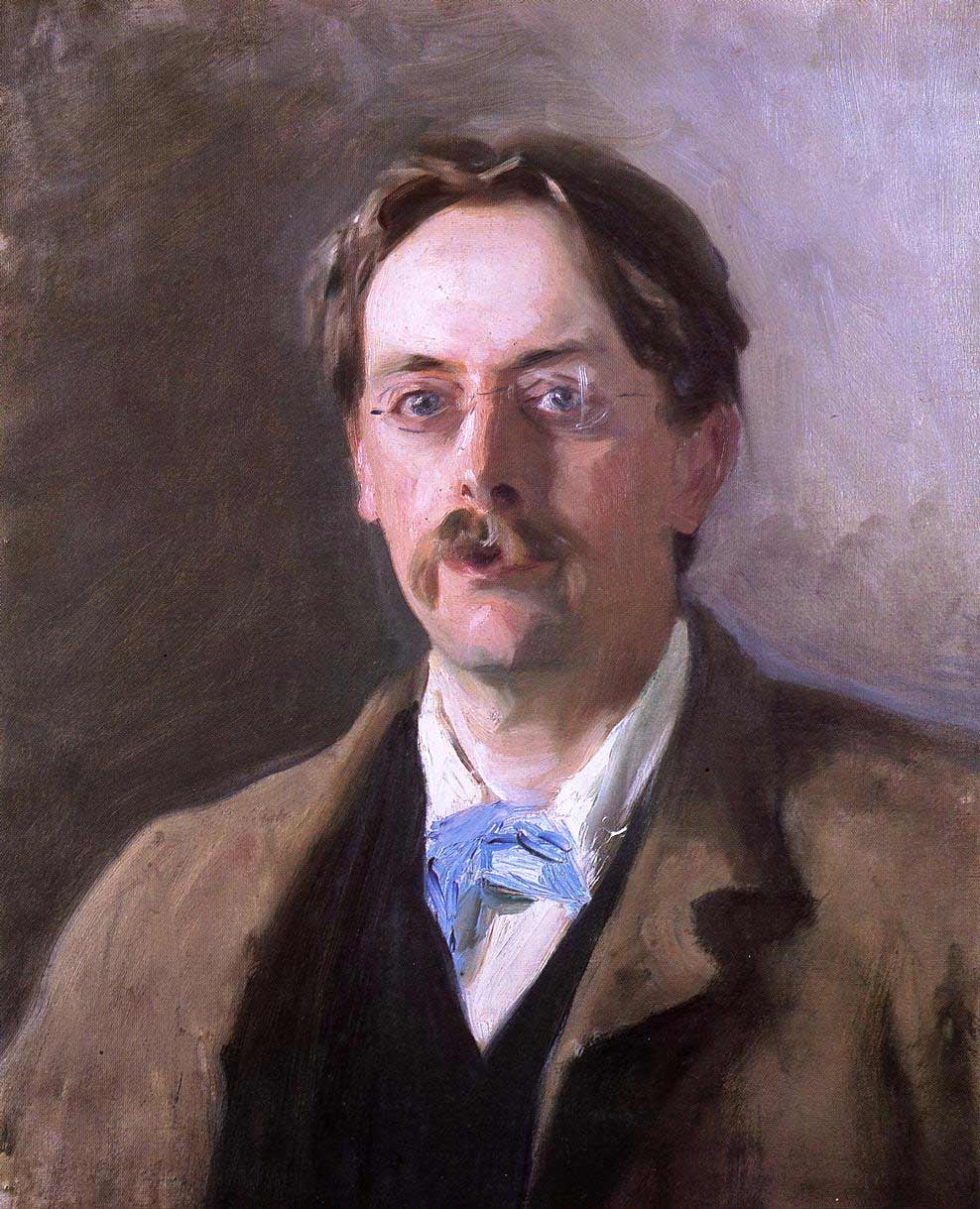


*Sir Edmund Gosse CB (1849-1928) Poet, author and critic.  Knighted in 1925. 


*General Sir Ian Standish Monteith Hamilton, GCB, GCMG, DSO, TD (1853-1947) Lieutenant of the Tower of London. Notable for commanding the Mediterranean Expeditionary Force during the WW1 Gallipoli Campaign.  


Sir Sidney Lee, FBA (1859-1926). Biographer, writer and critic. Delivered a paper on 10 December 1918 on ‘Raleigh’s discovery of Guiana’, at the Royal Colonial Institute, London.


Sir Harry Lushington Stephen (1860-1945). Judge.  (Delivered a paper on 27 November 1918 before the Royal Historical Society on ‘Raleigh’s Trial’). [no photo available]


*Major John Baker White DSO (1868-1944). American lawyer, military officer, and politician in the U.S. state of West Virginia.  Judge-Advocate, American troops in Great Britain and Ireland. 


*Speaker at the Mansion House, London, on Tuesday 29 October 1918.

Having listed them all, I was awed by the thought of so many distinguished figures working together to celebrate the life of a great British hero. 

I was ready to express my surprise at the relative silence with which Sir Walter’s 400th anniversary is being greeted today. 

But of course some people I know would say that the list simply reeks of privilege.  


FOR THE RALEIGH 400  CALENDAR OF 

Thursday, 1 February 2018

Raleigh 300: How did they mark the tercentenary in 1918? (2)


The Washington Singer building on Streatham Campus of the University of Exeter.  Sir Walter Raleigh's tercentenary may have had something to do with its origins
Image credit: Benjamin Evans 

Reading through an account of Raleigh commemorations in The Times of 28 October 1918 woke me up to the fact that the University of Exeter is a relatively recent foundation, having received its Royal Charter only in 1955. Its predecessor, the University College of the South-West of England, was established in 1922. On the basis of the last paragraph in the newspaper report below, with its mention of deliberations over the setting up of a University of the South-West, I was tempted to think that American philanthropy played a part. 

No surprise therefore to find that one of the principal benefactors was an American with strong Devon links. This was Washington Merritt Grant Singer (1866–1934), son of the sewing machine magnate Isaac Singer. Born at Yonkers, New York, in 1866, he moved as a child to England and grew up in Oldway Mansion, Paignton. Later he became a prominent racehorse owner.  The Washington Singer is now the University's School of Psychology. 

In fact two of the names proposed for the new institution were the University of Wessex and Raleigh University!  The latter suggestion was made by Sir Walter Peacock, Secretary to the Prince of Wales.  

Perhaps I see now why Budleigh resident Professor Harry Kay CBE, a Budleigh resident and former Vice-Chancellor of the University from 1973 to 1984, was such a Raleigh enthusiast.  

The 300th anniversary of Raleigh's death in October 1918 was treated as an event of national importance, judging by the number of eminent people involved. But that was another time. Almost another country.

What has happened?  Could it be 'due to a failure of national confidence', as the University's Dr Robert Lawson-Peebles suggested in a 1998 History Today article? 


Raleigh 300: A memorial service to commemorate the tercentenary of Sir Walter Raleigh's death was held at Exeter Cathedral on 27 October 1918, as well as in various places in London


The Times 28 October 1918

RALEGH AS EMPIRE BUILDER

TRIBUTES AT MEMORIAL SERVICE

The tercentenary of Sir Walter Ralegh’s death was celebrated yesterday afternoon by a special service at St. Margaret’s Church, Westminster.

The service was arranged by the Tercentenary Committee, of which the King is the patron, and Mr. Balfour (Foreign Secretary), Mr Page (the former United States Ambassador), and Lord Reading are honorary presidents. The vice-presidents include the Lord Mayor of London, General Sir Ian Hamilton, Mr. Irwin Laughlin (American Chargé d’Affaires), Admiral Sims and General Biddle. Lord Bryce is the honorary chairman of the committee, Bishop G.F. Browne and Professor Firth are the vice-chairmen, and Professor Gollancz, the honorary secretary.
Before the service two wreaths in memory of Sir Walter Ralegh were deposited at the foot of the communion table, near the place where the body is said to have been interred. The first was from the Royal Tercentenary Committee, and it bore the inscription “To the honoured memory of Sir Walter Ralegh – ‘The Shepherd of the Ocean’”. These words are taken from Sir Walter Ralegh’s unfinished poem “Cynthia”, which has been handed down in fragments. The other wreath, entirely of laurels, was from the Royal Geographical Society, and bore the inscription “To the memory of Sir Walter Ralegh on the tercentenary of his death.” The Lord Mayor and Professor Gollancz carried the committee’s wreath, and the other was conveyed by Sir Thomas Holditch (president) and Dr Hinks (secretary of the Royal Geographical Society).
            The service began by the choir singing an introit, composed by Christopher Tye (1500-1572), followed by Psalm xlvi. (chant by Purcell, 1658-1695) and Psalm cl. (chant by Pelham Humphreys (1647-1674). The first lesson was read by Mr Balfour  and the second by Mr Irwin Laughlin, the American Chargé d’Affaires. After the Collects a hymn written by Sur Walter Ralegh on the night before his execution (music by Tallis, 1520-1585) was sung. It was as follows:-
Even such is Time who takes in trust
Our youth, our joys, and all we have,
And pays us but with earth and dust;
Who, in the dark and silent grave,
When we have wandered all our ways,
Shuts up the story of our days.
But from that earth, that grass, and dust,
The Lord shall raise me up, I trust.
The Intercessions and General Thanksgiving were followed by another hymn, the words of which are attributed to Sir Walter Ralegh, and it was sung to the tune of the hymn “Christians, Awake.”
An address was then delivered by Canon Carnegie, rector of St. Margaret’s and Speaker’s chaplain.
At the end of the service, and during the singing of the Battle Hymn of the Republic,
A collection was made towards a fund for securing in London a Ralegh House for promoting intellectual cooperation between American and British scholars, and to serve as their centre for meeting in the metropolis.


            Memorial services were also held at the Temple Church and at Woolwich Paris Church. To-morrow, which is the actual anniversary of Sir Walter Ralegh’s death, a commemoration meeting, organized by the Tercentenary Committee, will be held at the Mansion House. There will also be a memorial service in Exeter Cathedral, followed by a public gathering, when addresses will be given by Professor J.W. Cunliffe, D.Litt., Professor of English Literature in the Columbia University, and Mr T. Seccombe, professor of English Literature at the Royal Military College, Sandhurst. It will be proposed at this meeting that there shall be a permanent memorial in the shape of a Ralegh Lectureship in subjects connected with history, navigation, exploration, and colonialization that are of joint interest to the British Empire and the United States at the proposed university of the South-West.       


FOR THE RALEIGH 400  CALENDAR OF 
EVENTS WORLDWIDE
IN 2018 CLICK ON 
http://raleigh400.blogspot.co.uk/2018/01/raleigh-400-calendar-of-events-in-2018.html   

Wednesday, 31 January 2018

Raleigh 300: How did they mark the tercentenary in 1918? (1)


St Margaret's, Westminster: Just one of the various places in London where Raleigh's tercentenary was marked by services, ceremonies and lectures one hundred years ago
Image credit: Reinhold Möller

Too many anniversaries this year in Budleigh, keeping us busy at Fairlynch Museum! Raleigh 400 and the end of WW1 of course.

And then the centenary of children's author and Brownies' leader Jean Blathwayt, for whom I'm designing an exhibition and a Blue Plaque this year.

And of course the 50th anniversary of visits by Imperial College Operatic Society to the little town of Budleigh Salterton. I bet you didn't know that. 

What still strikes me as extraordinary is the fact that in the midst of the bombardments and the slaughter of the Great War Britain took time off to celebrate the life of Sir Walter for his tercentenary.

Admittedly they must have known that the war had only another fortnight to run. Admittedly the country badly needed to pay tribute to its heroes - the recently slaughtered ones as well as those of its past. Admittedly British politicians wanted to show their gratitude to America for its support of the Allies, even if it had come in at a late stage. Germany of course had been desperately hoping to keep the USA out of the conflict. 

Even so, I am struck today by the energy that went into celebrating the tercentenary, and that was mainly in London.  In the capital it was a prestigious event involving people like the British Foreign Secretary and former Prime Minister Arthur Balfour, Lord Bryce - a former British ambassador in the USA - and numerous distinguished academics such as the Early English and Shakespeare scholar Israel Gollancz.

This is what Professor Gollancz told the nation via The Observer newspaper. It seems today like a very long time ago. 


THE OBSERVER, Sunday 27 October 1918

WALTER RALEIGH TERCENTENARY
OBSERVANCES IN ENGLAND AND AMERICA

The Raleigh tercentenary falls on Tuesday next, and the occasion is to be commemorated both here and in America in such a manner, Professor I. Gollancz said yesterday in an interview with a representative of THE OBSERVER, “as to emphasise the significance of the place of Raleigh as the pioneer and prophet of Anglo-American relations now happily realised, and also of his position as one of the great heroes of the modern world, embodying the splendour, imagination, and undaunted enterprise of the Elizabethan age.
            
             “His dream of England as the great colonising power was the tragedy of his life, and after three hundred years the moment seems signally appropriate for a joint celebration in his honour by the peoples of the English-speaking world now united in the brotherhood of arms and ideals.
            
              “At Raleigh, the capital of North Carolina, special pride is taken in Raleigh’s name and fame, and a programme has been arranged dealing with his life and work, with special reference to Anglo-American relations. It is proposed, amongst other schemes, to erect a statue of Raleigh there, and a series of meetings is to be held representing Virginia and other States and American institutions.
            
               “It was my privilege from the outset to be associated in the movement with Dr.Page, the late American ambassador, himself a citizen of North Carolina, who up to the time of his illness, and even during his illness, notively co-operated in bringing about the joint commemoration.
            
                “Here a representative committee has been formed, consisting mainly of representatives   
Of the leading learned societies, with Mr Balfour, Dr.Page, and Lord Reading as honorary presidents, Lord Bryce honorary chairman, Sir Charles Wakefield honorary treasurer, Bishop G.F. Browne and Professor C.H. Firth vice-chairman, and myself as honorary secretary. On the committee American interests are well represented. His Majesty the King has been graciously pleased to become patron of the commemoration.

THE PROGRAMME


            “A varied programme has been arranged. On Sunday (to-day) a special afternoon service, to which the public will be admitted as far as space allows, is to be held at St Margaret’s, Westminster. The rector, Canon Carnegie, will preach, and the Lessons will be read by eminent representatives of Great Britain and America. St Margaret’s is regarded by Americans with special reverence, for there Raleigh’s remains were interred, and there, in 1882, American citizens placed the Raleigh window in his honour. At the morning service at the Temple Raleigh will also be commemorated, the Master, Dr.Barnes, being the preacher.
            
            “On Tuesday there will be a public meeting at the Mansion House, at which the speakers will be Lord Bryce, Mr Balfour, General Sir Ian Hamilton, Lieutenant of the Tower, and, on behalf of American citizens, the American Consul-General, and Major J.Baker White, Judge-Advocate, American troops in Great Britain and Ireland. Mr Edmund Gosse will deliver a panegyric on Raleigh.
            
              “In the evening the Benchers of the Middle Temple will give a Raleigh tercentenary dinner. Raleigh was a member of the Middle Temple, and the dinner will take place in the famous old hall, where Shakespeare’s ‘Twelfth Night’ was acted in February, 1601-2.
            
              “At Exeter there will be a special commemoration for Devonshire folk. A service will be held in the Cathedral, and there will be a public meeting, at which Lord Fortescue, the Lord Lieutenant of the county, will preside. At Woolwich, associated with Raleigh’s voyages, there will also be a special commemoration; and at Jersey, of which he was Governor, and where his memory is held in special honour, steps are being taken for a permanent memorial.

A RALEIGH HOUSE

            “As regards other permanent memorials, my own proposal for a Raleigh House in London, mainly for promoting intellectual co-operation between British and American scholars, and to serve as a centre for their meetings, has been generally approved by the Committee and has received support in many quarters. Such an intellectual centre in London is greatly needed in many ways and for many purposes, especially for the work that scholars of the English-speaking world must take a leading part in at no very distant date, let us hope.

            
              “Many other functions have been arranged, especially a series of papers on various aspects of Raleigh’s life and work by members of the Committee, which have been assigned by the Committee to the various societies co-operating in the movement. Thus on October 30 Professor C.H. Firth will read a paper on Raleigh’s ‘History of the World’ before the British Academy at Burlington House at 4.30.  On November 1, at King’s College, at 5.30, I am giving an address on ‘Shakespeare and the New World.’ Mr Lionel Cust will read a paper next month on Raleigh’s portraits. On November 27 Sir Harry Stephen will read a paper before the Royal Historical Society on Raleigh’s Trial, and on December 10 Sir Sidney Lee will deal with Raleigh’s discovery of Guiana, at the Royal Colonial Institute.” 


Continued at http://raleigh400.blogspot.co.uk/2018/02/raleigh-300-how-did-they-mark.html


FOR THE RALEIGH 400  CALENDAR OF 
EVENTS WORLDWIDE
IN 2018 CLICK ON 
http://raleigh400.blogspot.co.uk/2018/01/raleigh-400-calendar-of-events-in-2018.html

Raleigh the Peacemaker (1586)

  A copy, in All Saints' Church East Budleigh, of one of the best known portraits of Sir Walter formerly attributed to Zuccaro but now...